Strikes in the workplace

Strikes in the workplace

Strikes in the workplace

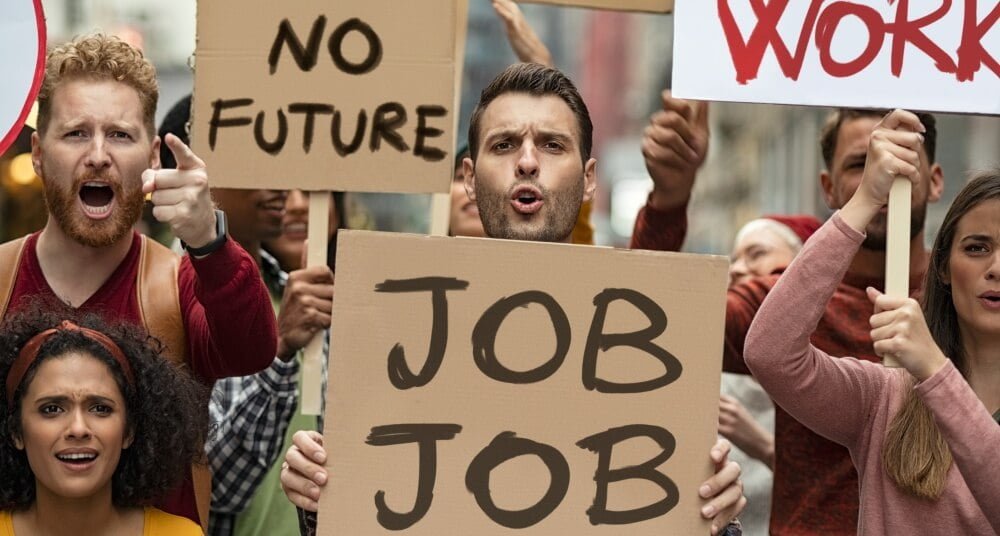
Strikes have a major impact on businesses’ profitability and survival, as well as the larger economy. According to the Department of Labour, there is a strong increase in strikes. The main reasons for strikes are mostly salary and bonus-related.

The Labour Relations Act (“LRA”) defines a strike as:

The partial or complete refusal to work, or the retardation or obstruction of work by employees for the purpose of remedying a grievance or resolving a dispute in respect of a matter of mutual interest.

Employers generally have the following questions:

Are employees allowed to strike?
Every employee has the right, in terms of the Constitution of South Africa, to strike. The LRA does stipulate certain provisions in order for a strike to be seen as a protected strike. If these procedures are not complied with, the strike will be seen as an unprotected strike.

DO YOU DISPLAY THE RIGHT LEGAL POSTERS?
LET LWO ASSIST YOU!

What are the procedures that employees must follow for the strike to be a protected strike?

Employees should in all instances, when dealing with a grievance or issue in the workplace, make use of the internal grievance procedure. When the outcome of the grievance is not satisfactory, the employee can refer the matter to the CCMA. A commissioner will then try and resolve the dispute through conciliation. If the dispute cannot be resolved, or after the lapse of 30 days since the referral of the dispute to the CCMA, the commissioner will issue a certificate stating that the matter is unresolved and that the employees have the right to embark on a protected strike. Employees should however in all instances notify the employer of their intention to strike by giving the employer at least 48 hours’ notice of the intended strike.

Can employers dismiss employees who participate in a strike?

The employer can take disciplinary action against employees that make themselves guilty of misconduct during the course of a protected strike. Misconduct during strike action can include intimidation of fellow employees, damaging property, etc. When employees do not comply with the above mentioned procedures, the strike will be seen as an unprotected strike. Employees that participate in unprotected strike action can be dismissed, subject to the employer following a correct and fair procedure. Keep in mind that a disciplinary hearing must that place before an employee can be dismissed.

What happens when employees participate in unprotected strikes?

Although employees who participate in an unprotected strike can be dismissed, it is crucial for employers to follow the correct procedure when dismissing these employees. Employers should issue employees with an ultimatum that states that they are taking part in an unprotected strike and that the employer has the right to take further disciplinary action if they do not resume duties. Through the ultimatum the employer must urge employees to resume duties and prevent further disciplinary action. The employer must also inform the employees of the possible consequences should the employees not resume their duties. If the employees have not resumed their duties in the time period allowed, the employer must issue a final ultimatum. It is very important that employees are provided with enough time to remedy the situation when ultimatums are issued. The ultimatums must be clear and understandable to circumvent any confusion.

Employers and employees are urged to ensure that they follow the necessary procedures when dealing with disputes in the workplace.  As specialists and market leaders in the field of labour law, the LWO assist employers to address business risks by managing it proactively.

Become a member today and take the headache out of labour law compliance!

IS YOUR BUSINESS LABOUR-COMPLIANT?

FIND OUT NOW.

Stay ahead with our comprehensive compliance questionnaire. We’ll help pinpoint any gaps, ensuring you operate within legal guidelines.

Labour legislation in South Africa

Labour legislation in South Africa

Labour legislation in South Africa

Labour legislation sets strict requirements for employers. The South African labour market is rightly regarded as highly regulated. This view is confirmed in the World Economic Forum’s Global Competitiveness Report of 2017/2018 (WEFGC report) in which South Africa ranks as follows out of 137 countries:
  • Hiring and firing practices: 125/137
  • Pay and productivity: 99/137
  • Cooperation in labour-employer relations: 137/137
  • Flexibility of wage determination: 132/137
  • Business cost of crime and violence: 133/137
  • Business impact of tuberculosis: 132/137
  • Business impact of HIV/AIDS: 128/137
  • Quality of higher education: 114/137
  • Quality of math and science education: 128/137

In general the report indicates restrictive labour regulations as one of the most problematic factors for doing business in South Africa.

DO YOU DISPLAY THE RIGHT LEGAL POSTERS?
LET LWO ASSIST YOU!

The following legislation regulates labour relations in South Africa:

The LRA remains the principal labour statute and regulates collective rights ans also provides protection against labour malpractices. This act regulates trade unions and employers’ organisations. It also establishes key dispute resolution agencies in the form of the Commission for Conciliation, Mediation and Arbitration (CCMA) and labour court.
The BCEA establishes and enforces the minimum statutory terms on which employers and employees may contract.

Sectoral Determination

A Sectoral Determination controls the terms and conditions of employment in a particular sector where there is no centralised collective bargaining and which requires detailed and specific regulations. Conditions in a Sectoral Determination may differ form those in the BCEA, but will rank superior.
Bargaining Council Determinations
Bargaining Councils deal with collective agreements, solve labour disputes, establish various schemes and make proposals on labour policies and laws. Trade unions and employers’ organisations may form Bargaining Councils.

IS YOUR BUSINESS LABOUR-COMPLIANT?

FIND OUT NOW.
Stay ahead with our comprehensive compliance questionnaire. We’ll help pinpoint any gaps, ensuring you operate within legal guidelines.

Social media in the workplace

Social media in the workplace

Social media in the workplace

Twitter, Facebook, Instagram, BBM and WhatsApp… It is a fact that the use of social media exploded. Employees’ now have a forum to express themselves freely about anything and at any time. However, views expressed on social media can severely damage your business or have a negative impact on your business.

So how do employers deal with an employee who expressed his/her view on social media and in return damaged your business?

In the South African common law is there are rules of defamation. These rules are applied equally to all network sites and electronic communication media. Thus, are there no special rules for social media or e-mail usage.

So let’s look at an example. If an employee publishes something that could damage the reputation of another person or a business, it can be construed as defamation. Note that all persons have the right to dignity and not to have their reputation in infringed.

Because of the public nature of social media sites, an employee’s posts can be viewed by all his/her friends. These friends can forward this message to their friends. Unfortunately, some of these friends may by your clients, which in itself is problematic and can damage the reputation of your business.

DO YOU DISPLAY THE RIGHT LEGAL POSTERS?
LET LWO ASSIST YOU!

Case study:

In a recent High Court judgement, the judge confirmed the existing legal position regarding the infringement of privacy, defamation and damages. In this case, the complainant sued the defendant on the basis of the following Facebook post during February 2012:

“I wonder too what happened to the person who I counted as best friend for 15 years, and how this behaviour is justified. Remember, I see the broken-hearted faces of your girls everyday. Should we blame the alcohol, the drugs, the church, or are they more reasons not to have responsibility for the consequences of your own behaviour? But mostly, I wonder whether, when you look in the mirror in your drunken testosterone haze, if you still see a man?”

The court agreed with the complainant that his right to privacy was infringed upon and that the posting constituted a defamatory statement. The test for defamation was whether “a reasonable person of ordinary intelligence might reasonably understand the words concerned as defamatory”. The court ruled in favour of the complainant irrespective of the truthfulness of the posting.

Therefore, employers and employees should beware that irresponsibly using and posting damaging statements and information on social media can have far-reaching and unacceptable consequences.

What should employers do?

Employers are encouraged to develop a social media policy to ensure that employers know what are expected form them and how they should behave on social media platforms. The social media policy must tell your employees the following:

  • What is considered as responsible behaviour.
  • What they may and may not post.
  • What the consequences will be for employees who contravene the policy.

Some of the following acts can be included in the policy as an example:

“Cyber loafing” and the abuse of the employers resources
Employees are prohibited from using the employers’ resources including computers, tables and telephones, for their own purposes during or outside of working hours. Contravention of this rule can lead to disciplinary action taken against the employee.

Creating disharmony and disseminating offensive or abusive material
An employee that circulates information that is racist, defamatory, sexist or pornographic constitutes gross misconduct. Racist comments are not only offensive but also creates disharmony among employees and could lead to disciplinary action.

Derogatory statements
An employee who posts derogatory and offensive messages about the company may be found guilty of bringing the company name into disrepute. This could lead to disciplinary action or an action of defamation.

These are just some examples and every employer can tailor a policy to their business needs.

IS YOUR BUSINESS LABOUR-COMPLIANT?

FIND OUT NOW.

Stay ahead with our comprehensive compliance questionnaire. We’ll help pinpoint any gaps, ensuring you operate within legal guidelines.

Traditional healers – valid medical certificates?

Traditional healers – valid medical certificates?

Traditional healers – valid medical certificates?

Traditional healers are consulted by approximately 60% of the South African population. Medical certificates are, more often then not, a requirement for employers when an employee has been ill. Can a note form a traditional healer be accepted as a valid medical certificate?

No medical certificate – no pay

In terms of the Basic Conditions of Employment Act (BCEA) an employer is not required to pay an employee if:

  • the employee has been absent form work form more than two consecutive days OR
  • on more than one occasion during an eight-week period
  • and does not produce a medical certificate on request of the employer, stating that the employee was unable to work for the duration of the employee’s absence on account of his/her sickness or injury.

Any employee is entitled to the number of days’ paid sick leave equal to the number of days normally worked in a 6 week period during a sick leave cycle of 36 months. During the first 6 months of employment, an employee is entitled to 1 day’s paid paid sick leave for every 26 days worked.

DO YOU DISPLAY THE RIGHT LEGAL POSTERS?
LET LWO ASSIST YOU!

Is it a valid medical certificate?

The medical certificate must be issued and signed by a medical practitioner or any other person who is certified to diagnose and treat patients. This person must also be registered with a professional council established by an Act of Parliament.

In the matter of Kiviets Kroon Country Estate (Pty) Ltd v Mmoledi & others [LAC] JA78/10) an employee was dismissed for being absent from work. The employee had a medical certificate from a traditional healer, indicating that she had premonitions of ancestors. The employer dismissed the employee for being absent from work without having a valid medical certificate. The CCMA and the Labour Court found the dismissal was not justified as she had a justifiable reason for not being at work. The case went to appeal to the Labour Appeal Court. The Labour Appeal Court said that the Constitution recognises traditional beliefs and practices, so employers should also accept these beliefs.

What does this mean for me as an employer?

For traditional healers’ sick note to be acceptable as a valid medical certificate, the traditional healers must be:

  • certified to diagnose and treat patients
  • registered with a professional council

Abuse of sick leave can have a huge impact on a business’s productivity and profitability. To ensure that employees do not abuse sick leave, employers should implement clear rules and standards in the workplace regarding attendance, absenteeism and sick leave.

We advise employers to use the following guidelines and ensure that employees know:

  • how and when to apply for any form of leave;
  • who to contact if they are ill, injured or have a family emergency;
  • how to contact that person (telephone, text message, e-mail, etc.);
  • when they will be required to submit supporting documentation such as a medical certificate from a registered medical practitioner, or proof of a death in the family; and
  • what the consequences of non-compliance will be (disciplinary action, unpaid leave, etc.)

It is also very important that the employer monitor work attendance and leave taken. Do monthly reports to identify any possible patterns in terms of absenteeism amongst employees. These patterns and trends are usually indicative of a more serious problem, for instance chronic medication condition.

IS YOUR BUSINESS LABOUR-COMPLIANT?

FIND OUT NOW.

Stay ahead with our comprehensive compliance questionnaire. We’ll help pinpoint any gaps, ensuring you operate within legal guidelines.

Retrenchment – who stays and who goes

Retrenchment – who stays and who goes

Retrenchment – who stays and who goes

All employers have two goals: to make a profit and be sustainable. Employers should therefore consistently evaluate all factors that can have an influence on the long term success of the business in order to create a cost effective environment enabling the business to stay competitive with in the market. In the current economic climate, many employers struggle and consider different options to adjust to a changing environment. Retrenchment is a no fault dismissal, as the employee did nothing wrong and dismissal is due to operational requirements. As with all dismissals, the retrenchment process must be both substantively and procedurally fair. But how does an employer decide who stays and who goes?

It is very difficult question to answer on which is the best selection criteria to apply in the retrenchment process.

In terms of Section 189(7) there are two types of section criteria recognised that an employer may use to select the employee to dismiss namely:

  • one that has been agreed to by the consulting parties; or
  • one that is fair and objective.

During the retrenchment process, an obligation is placed on the employer in terms of Section 189(2) of the Labour Relations Act and the other consulting party/parties to engage in a meaningful, joint consensus-seeking process in an attempt to reach a consensus on the method for selecting the criteria to be applied when determining which will stay and which will go.

To the extent that the consultation on selection criteria does not result in an agreement, it is then left to the discretion of the employer to unilaterlly decide on a selection criteria to be used. Provided that the employer will then have to prove that the criteria used was fair and objective.

Traditionally employers and consulting parties tend to rely on the “last in, first out” (“LIFO”) principle. This principle is generally accepted as a selection criteria according to the CCMA Code of Good Practice on Operational Requirements. It is also the criterion associated with the least risk, even though that it has never been endorsed as the only fair and objective criterion. Employers and consulting parties however fail to give consideration to the other available fair and objective criteria’s. The failure to give due consideration to other criteria’s might result in the court finding that a fair criteria was not applied and that the retrenchment process was procedurally unfair.

DO YOU DISPLAY THE RIGHT LEGAL POSTERS?
LET LWO ASSIST YOU!

There are numerous decisions in which the Labour Court has held that an employer is entitled to adopt a multi-rating selection criteria such as:

  • Years of service (“First in, First out”)
  • Qualifications and experience
  • Direct supervisor review (including an assessment of factors such as commitment to company and team goals, teamwork and dependability, attendance, flexibility, initiative and career potential)
  • Competency, efficiency, key skills retention
  • Continued service delivery
  • Performance appraisals and past performance (or discipline, for that matter) and
  • “Bumping”
  • Voluntary severance package
  • Retirement package
  • Redeployment package

As long as the aforementioned criteria’s are applied fairly, consistently, objectively, clear and transparent, and applied in such a way that the process does not degenerate into a dismissal for misconduct, poor performance or incapacity. The Labour Court referred to these as “procedural safeguards”.

This multi-rating selection criteria may cure a certain amount of subjectivity attached to the selection criteria themselves. This would also most probably be found to be consistent with the requirements of the Labour Relations Act.

We strongly advise employers to implement clear rules in the workplace and follow correct procedures with regards to all labour matters. Employers should especially focus on retirement and general discipline in the workplace, by acting proactively and consistently.

IS YOUR BUSINESS LABOUR-COMPLIANT?

FIND OUT NOW.

Stay ahead with our comprehensive compliance questionnaire. We’ll help pinpoint any gaps, ensuring you operate within legal guidelines.

The employment contract and annexures

The employment contract and annexures

The employment contract and annexures

Labour legislation is not negotiable and non-compliance holds huge business risk for employers. The employer can greatly contribute towards the business’s sustainability and profitability by addressing labour risk proactively. This also ensures a working environment with reduced conflict, friction and misunderstanding. In turn, this will also create a structured environment receptive for growth. Labour legislation is applicable to all employers and employees. It aims to regulate labour relations ensuring fairness in the workplace.

An employment contract is crucial in managing labour relations as it is the basis of the relationship between the employer and employee. It is the most important document in the workplace and defines the terms and conditions as agreed upon between the parties and regulates their relationship. Take note that no part of the employment contract may be amended unilaterally and without consultation with the employee. When drafting an employment contract, the employer must take care to ensure that the contract complies with all applicable labour legislation depending on specific industry.
DO YOU DISPLAY THE RIGHT LEGAL POSTERS?
LET LWO ASSIST YOU!

The basic requirements that must be complied with in the employment contract:

The Basic Conditions of Employment Act (“BCEA”) stipulates that at the start of employment, employers must provide an employee with “Written Particulars of Employment” containing the following information:

  • Employer and employee details – the employer’s full name and address as well as the employee’s name and occupation or brief description of the work.
  • Employment details – place/s of work, stating date of employment, working hours and days of work.
  • Payment details – salary/wage or rate and method of calculating wages, rate for overtime, any other cash payments, any payments in kind and their value, frequency of payment and any deductions.
  • Leave details – any leave to which the employee is entitled.
  • Notice period required for termination of the employment contract.
  • Contract period of the employment contract – is the position of a permanent/indefinite nature; or is the position of a temporary nature, for spesific time period or for a specific project? Employers must clearly understand that to disguise what is actually permanent employment in the form of a fixed term contract is illegal.

Proactive clauses to include in the employment contract

To comply with labour law is not negotiable but doesn’t have to be a headache. Employers can use labour law to their advantage to protect their business by including proactive clauses in the employment contract. By doing this the employer can eliminate possible future disputes and put the himself/herself in the best position with regards to the employment relationship going forward.

Proactive clauses includes:

  • Reference to policies, procedures and disciplinary code that describe rules and procedures the employer and employees must adhere to.
  • Time periods – probation period, retirement age, short time, lunch breaks, etc.
  • Consent – medical testing, alcohol and drug testing
  • Consent – deductions for damages, training, etc.

Add annexures to the employment contract

In addition to the employment contract, the employer can add annexures to further protect the business going forward. Typical annexures that form part of the employment contract include:

  • Declarations of duties – what is expected from the employee with regards to duties and the employee’s fixed standard
  • Restraint of trade and confidentiality information, unique methods and procedures, patents, etc.

We strongly advise employers to make use of proactive clauses in the employment contract. It is also extremely important to follow correct procedures with regards to all labour matters.

IS YOUR BUSINESS LABOUR-COMPLIANT?

FIND OUT NOW.

Stay ahead with our comprehensive compliance questionnaire. We’ll help pinpoint any gaps, ensuring you operate within legal guidelines.