
Effect of the new earnings threshold 2021

Effect of the new earnings threshold 2021

Effect of the new earnings threshold 2021

Together with the new national minimum wage that came into effect on 01 March 2021, employers also have to take note of the implementation of the increased annual earnings threshold. The previous threshold has been in effect since 01 July 2014 and increased now from R205 433.30 to R211 596.30. The earnings threshold affects provisions of the Basic Conditions of Employment Act, 1997 (BCEA), the Labour Relations Act, 1995 (LRA) and the Employment Equity Act, 1998 (EEA).

What is earnings?

“Earnings” means an employee’s regular annual remuneration before deductions (e.g. income tax, pension fund contributions, medical aid contributions and similar payments), but excludes contributions made by the employer in respect of the employee. Subsistence and transport allowances received, achievement awards and payments for overtime worked will also be excluded within the scope of remuneration.

UPCOMING LABOUR INSPECTION?
LET LWO ASSIST YOU!

Threshold | BCEA

In terms of the BCEA, employees earning in excess of the earnings threshold are excluded from the provisions which regulate ordinary hours of work, overtime, compressed working weeks, averaging of hours of work, meal intervals, daily and weekly rest periods, Sunday pay, pay for night work and pay for work on public holidays. This means that regulation of the aforementioned should be by mutual agreement and will not be regulated by the BCEA as is the case with employees earning below the threshold.

Threshold | LRA

In terms of the LRA, employees earning in excess of the earnings threshold are not subject to the provision deeming the employees engaged by a temporary employment service/labour broker, to be employees of the employer/client for purposes of the LRA. In addition, employees earning in excess of the earnings threshold fall outside the scope of the provisions relating to fixed term employees who are deemed to be employed indefinitely after three months (in the absence of justifiable reasons for fixing the term of the contract).

Threshold | EEA

An employee earning in excess of the earnings threshold who has a dispute under Chapter II relating to unfair discrimination, is not permitted to refer the dispute to the Commission for Conciliation, Mediation and Arbitration (CCMA) for arbitration. Such an employee is obliged to refer the dispute directly to the Labour Court for adjudication (unless the dispute relates to alleged unfair discrimination on the grounds of sexual harassment, or the parties all agree to arbitration).

It is vital for every employer to determine which employees earn in excess of the earnings threshold and which employees earn below the threshold, as this has a huge impact on the terms and conditions of employment the employer and employee can agree on. Employers must stay informed and up to date regarding labour law in order to take proactive action to protect their rights and their businesses with regards tot he employment relationship going forward.

IS YOUR BUSINESS LABOUR-COMPLIANT?

FIND OUT NOW.

Stay ahead with our comprehensive compliance questionnaire. We’ll help pinpoint any gaps, ensuring you operate within legal guidelines.

National minimum wage 2021

National minimum wage 2021

National minimum wage 2021

Since publication of this article, the national minimum wage has been officially announced in the Government Gazette. Follow this link to read the updated article!

Despite the weak state of the South African economy, as well as the impact of the Coronavirus (COVID-19) and negative effect of the lockdown on employers’ financial position, the National Minimum Wage Commission (NMWC) made a recommendation to the Minister of Employment and Labour to increase the current national minimum wage with effect from 01 March 2021Until this is officially announced in the government gazette, employers must continue to comply with current legislation with regards to industry specific minimum wages.

The NMWC’s recommendation is to link the increase of the wage to the consumer price index (CPI) plus 1,5%. The CPI as of September 2020 was 3,0% and the NMWC submitted that the CPI will likely be 2,5% – 3,0% in January 2021. The increase is consequently calculated at 4,5% and entails an increase of the current minimum wage of R20.76 per hour to R21.69 per hour.

UPCOMING LABOUR INSPECTION?
LET LWO ASSIST YOU!

What about the agricultural sector?

The agricultural sector currently (2020) receives exemption to only pay 90,0% of the national minimum wage. This exemption expires and the NMWC’s recommendation is to equalise the minimum wage for farm workers with the national minimum wage of 2021. This calculates to a 16,1% increase of the current minimum wage of R18.68 per hour to R21.69 per hour. Employers in the agricultural sector should take note that domestic workers on a farm are regarded as farm workers and must receive the correct wage.

What about the domestic worker sector?

The domestic worker sector currently receives exemption to only pay 75,0% of the national minimum wage. The NMWC’s recommendation is to adjust the exemption to 88,0% of the national minimum wage of 2021. This calculates to a 22,6% increase of the current minimum wage of R15.57 per hour to R19.09 per hour. The NMWC further recommends to equalise the minimum wage for domestic workers with the national minimum wage of 2022.

The LWO is in the process of making representations to the Department of Employment and Labour and invites members and other employers to comment on the NMWC’s recommendation. Comments must be sent directly per e-mail unathi.ramabulana@labour.gov.za by 20 December 2020.

IS YOUR BUSINESS LABOUR-COMPLIANT?

FIND OUT NOW.

Stay ahead with our comprehensive compliance questionnaire. We’ll help pinpoint any gaps, ensuring you operate within legal guidelines.

Did my employee resign or not?

Did my employee resign or not?

Did my employee resign or not?

The workplace is an emotional space with regards to labour relations. Often this can lead to an employee saying “I resign!”, or the employee hands in issued equipment and leaves the premises. But can the employer accept this, or should a resignation only be in writing? South Africa’s labour environment is highly regulated. Every workplace is unique and employers must take care to manage labour relations in line with labour law, especially when the employment relationship is terminated. By acting inconsistently with legislation, even by accident or unknowingly, employers put their businesses at unnecessary risk.

When the employment relationship is terminated, for whatever reason, it is very important that the employer follows the correct procedures and has the necessary supporting documentation in place, should the employee refer a dispute to the Commission for Conciliation, Mediation and Arbitration (CCMA).

UPCOMING LABOUR INSPECTION?
LET LWO ASSIST YOU!

The employment relationship can come to an end due to the following reasons:

  • The employee resigns voluntarily
  • The employer dismisses the employee after following a disciplinary hearing procedure
  • The employer lays the employee off after following a retrenchment procedure
  • The permanent employment contract reaches the end date (retirement age) and expires
  • The fixed term employment contract reaches the agreed end date and expires
  • The employee passes away

Employers must take note of the fact that an employee cannot dismiss him-/herself. When an employee absconds, it is a disciplinary offence and the employer must take the relevant disciplinary steps. The only way an employee can terminate the employment relationship, is to resign. Resignation can take place in two ways:

  • Resign: Voluntary resignation – in writing
    The employee submits a written resignation to the employer and there is no uncertainty regarding the resignation. It is also clear that the employee was not dismissed. Employers should, as far as possible, attempt to get employees to resign in writing.
  • Resign: Voluntary resignation – verbal and/or clear action
    When an employee resigns without confirming it in writing, it can create risk for the employer because it is more difficult for the employer to prove that the employee was not dismissed. A recent court ruling in the Labour appeal court, empowers employers to be able to accept a voluntary resignation that is not in writing, provided that the employer can prove that the employee’s action clearly and unambiguously indicated that the employee terminated the employment relationship voluntarily. Examples of this behaviour may include:
    • an employee who clearly verbally resigns and leaves the work premises thereafter;
    • an employee who hands in the employer’s issued equipment and then leaves the work premises;
    • an employee who displays the above behaviour and then accepts employment with another employer.
To further protect the employer, we recommend that the employer records this behaviour of the employee and then confirms it in writing that the employer considers this action as a voluntary resignation and accepts it as such.
Employers should be proactive and ensure that employment contracts, the disciplinary code, procedures and policies are in place and that this documentation complies with applicable labour law.

IS YOUR BUSINESS LABOUR-COMPLIANT?

FIND OUT NOW.

Stay ahead with our comprehensive compliance questionnaire. We’ll help pinpoint any gaps, ensuring you operate within legal guidelines.

Alert level 1: COVID-19

Alert level 1: COVID-19

Alert level 1: COVID-19

Alert level 1

South Africa moved to an alert level 1 status regarding the Coronavirus (COVID-19) pandemic since 21 September 2020. Download the Government Notices dated 17 September 2020 and 19 September 2020 to take note of and implement.

This pandemic undoubtedly has a wide impact on businesses.  Although we are currently on an alert level 1, businesses’ loss of income and obligation towards employees is still a great concern for many employers, especially where employers are unable to pay their employees in full.

Every business is unique and we encourage our members to contact the LWO for advice.  The LWO is available 24/7 to assist employers with regards to labour law.  Please contact the LWO for assistance at 086 110 1828 or if you have any queries in this regard.

UPCOMING LABOUR INSPECTION?
LET LWO ASSIST YOU!

What about the LWO?

The LWO is authorised to provide services to LWO members on the following basis (not yet a member – have a look at our cost-effective and user friendly membership packages):
    • 24/7 telephonic and electronic advice – phone 086 110 1828 or send an e-mail to info@lwo.co.za;

    • Legal services on the work premises of employers who are classified as essential services, or who are permitted to resume business activities under alert level 1.  These services for members are strictly monitored on a continuous basis and take place in line with applicable safety regulations.

    • Legal services via online platforms such as Skype, Microsoft Teams, Zoom, Google Meet, etc. for employers who are classified as essential services, or who are permitted to resume business activities under alert level 1

    We confirm that the LWO complies with the set requirements in terms of health and safety in the workplace.

    Stay updated – www.sacoronavirus.co.za

    IS YOUR BUSINESS LABOUR-COMPLIANT?

    FIND OUT NOW.
    Stay ahead with our comprehensive compliance questionnaire. We’ll help pinpoint any gaps, ensuring you operate within legal guidelines.

    Alert level 2: COVID-19

    Alert level 2: COVID-19

    Alert level 2: COVID-19

    Alert level 2

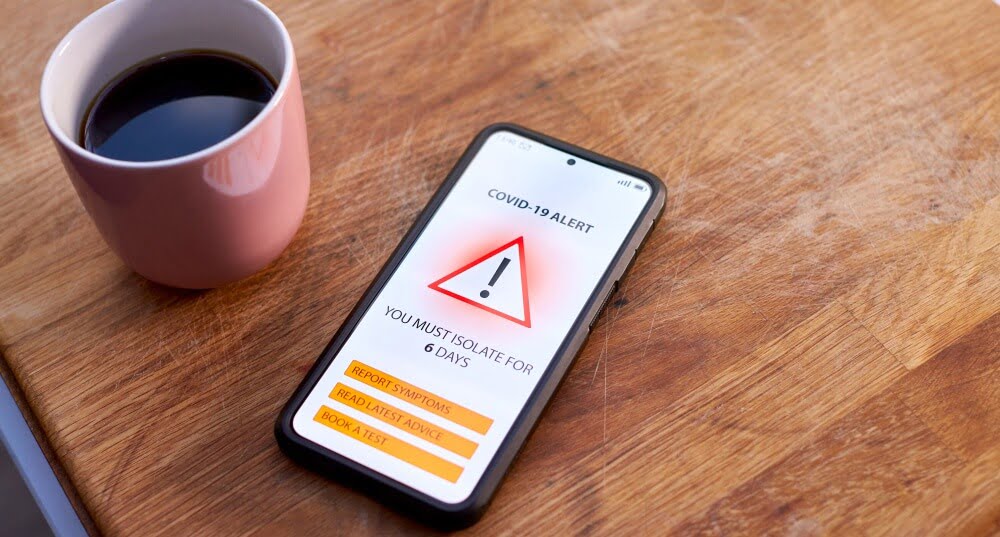
    South Africa moved to an alert level 2 status regarding the Coronavirus (COVID-19) pandemic since 18 August 2020. Download the Government Gazette dated 17 August 2020 to take note of and implement.

    This pandemic undoubtedly has a wide impact on businesses.  Although we are currently on an alert level 2, businesses’ loss of income and obligation towards employees is still a great concern for many employers, especially where employers are unable to pay their employees in full.

    Every business is unique and we encourage our members to contact the LWO for advice.  The LWO is available 24/7 to assist employers with regards to labour law.  Please contact the LWO for assistance at 086 110 1828 or if you have any queries in this regard.

    Not an LWO member yet?
    Take a look at our membership packages.

    What about the LWO?

    The LWO is authorised to provide services to LWO members on the following basis (not yet a member – have a look at our cost-effective and user friendly membership packages):
    • 24/7 telephonic and electronic advice – phone 086 110 1828 or send an e-mail to info@lwo.co.za;
    • Legal services on the work premises of employers who are classified as essential services, or who are permitted to resume business activities under alert level 2.  These services for members are strictly monitored on a continuous basis and take place in line with applicable safety regulations.
    • Legal services via online platforms such as Skype, Microsoft Teams, Zoom, Google Meet, etc. for employers who are classified as essential services, or who are permitted to resume business activities under alert level 2

    We confirm that the LWO complies with the set requirements in terms of health and safety in the workplace.

    Stay updated – www.sacoronavirus.co.za

    IS YOUR BUSINESS LABOUR-COMPLIANT?

    FIND OUT NOW.
    Stay ahead with our comprehensive compliance questionnaire. We’ll help pinpoint any gaps, ensuring you operate within legal guidelines.

    CCMA cases & COVID-19

    CCMA cases & COVID-19

    CCMA cases & COVID-19

    Thousands of employees were retrenched or dismissed during the COVID-19 induced lockdown. Many of these employees have turned to the Commission for Conciliation, Mediation and Arbitration (CCMA) for assistance and referred CCMA cases.

    The CCMA has received nationally 23 532 referrals, affecting 43 867 workers from 1 April 2020 to 31 May 2020. Most cases referred pertain to unfair dismissals.

    The CCMA director, Cameron Morajane, said they are expecting these referrals to increase in the coming months as the regulations are relaxed and more people return to work.
    The CCMA aims to promote fair labour practices and to resolve disputes within the working environment. An employee can refer a dispute tot the CCMA on account of dismissal, wages and working conditions, unfair labour practices, workplace changes and discrimination.

    With CCMA cases, arbitration awards in favour of the employee are in general due to the employer not following the correct procedures (click on this link to read our article on “tips to survive the CCMA”) and can have a huge financial impact.

    Not an LWO member yet?
    Take a look at our membership packages.

    What can go wrong?

    • What happens when you dismiss an employee “incorrectly”?
    • What penalties are payable with labour disputes and CCMA cases?
    • Do you settle for a generic employment contract with little protection?
    • What happens when you don’t follow the correct procedure with every labour dispute every time?
    • What happens when you lose your temper and dismiss someone “with immediate effect” in the heat of the moment?

    Possible orders against the employer?

    • CCMA: 3-12 months’ salary and/or reinstatement
    • Labour court: 3-24 months’ salary and/or reinstatement

    The LWO is a registered employers’ organisation with the Department of Labour and automatically has the right to represent our members in the CCMA, Bargaining Councils and Labour court. We have a proven track record at the CCMA with a success rate of 99.98%! The LWO was established in 1990 and have been assisting employers for 30 years!

    IS YOUR BUSINESS LABOUR-COMPLIANT?

    FIND OUT NOW.

    Stay ahead with our comprehensive compliance questionnaire. We’ll help pinpoint any gaps, ensuring you operate within legal guidelines.